
Link Building Reports That Win Client Confidence
By Sheikh Athar
8 min read
Table of Contents

In the high-stakes world of digital marketing, results are the only currency that matters. However, even the best results can go unnoticed if they aren’t communicated effectively.
As we move through 2026, the gap between a “good agency” and a “trusted partner” is defined by the quality of their reporting.
At ethicalbacklinks.com, we believe that transparency isn’t just a buzzword; it’s the foundation of every high-DR link we secure.
A report shouldn’t just be a list of URLs. It should be a narrative of growth, showing exactly how your investment translates into authority and revenue.
Why Link Building Reporting is Important?
Reporting is the bridge between technical SEO actions and business outcomes.
Without a clear report, a client sees a “cost,” but with a structured report, they see an “asset.”
- Trust and Transparency: Clients need to know that the links are “ethical” and not coming from link farms or PBNs.
- Strategic Alignment: It ensures both the agency and the client are targeting the right pages and keywords.
- ROI Justification: Link building is a long-term game. Reports highlight the incremental wins (like ranking jumps or traffic spikes) that prove the strategy is working before the final revenue goals are hit.
“The goal is to turn data into information, and information into insight.” — Carly Fiorina
15 Data Points to Include in Your Link Building Reports
To win client confidence in 2026, your reports must be comprehensive.
Here are the 15 essential data points categorized into Acquisition, Outcomes, and Operations.
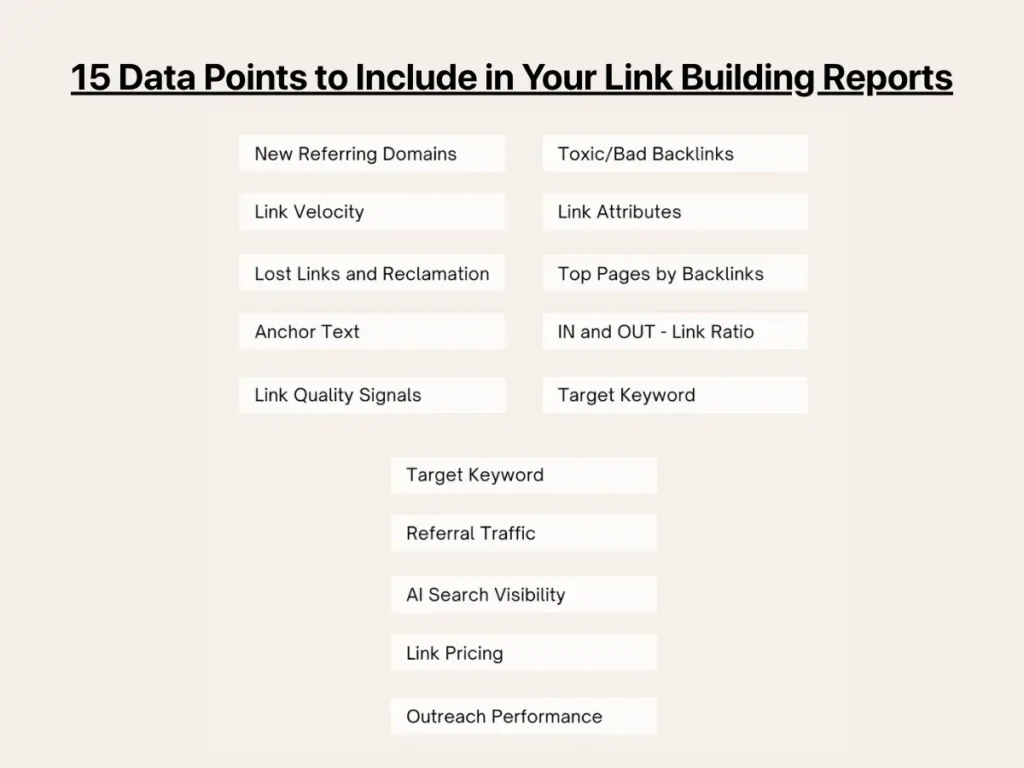
Link acquisition and backlink profile report
This section proves the “health” of the link-building campaign. It shows that you are building a natural, powerful, and sustainable footprint.
1. Number of new referring domains and backlinks
It’s not just about the volume of links; it’s about diversity.
A report should distinguish between the total number of links and the number of unique domains.
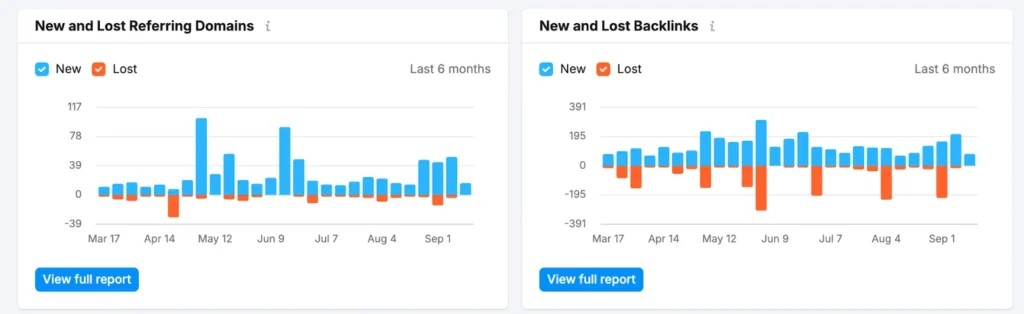
If you get 10 links from the same website, it doesn’t carry the same weight as 10 links from 10 different high-authority sites.
In 2026, Google’s algorithms are smarter at spotting “site-wide” links, so showing a high number of unique referring domains proves a healthy, natural reach.
2. Link velocity
Link velocity is the speed at which your site gains new backlinks over time.
If a site suddenly gains 500 links in a week after months of silence, it triggers a “spam” alert for search engines.
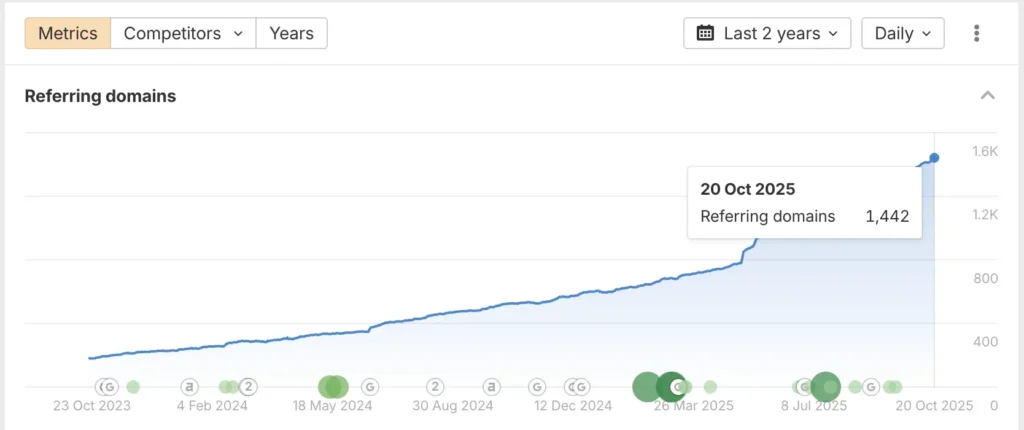
A professional report shows a steady, upward graph. This “natural growth” indicates to Google that your content is being shared and cited organically by the community, rather than being manipulated by bulk bot-buying.
3. Lost links and reclamation efforts
The internet is dynamic, pages get deleted, and webmasters change their content.
Reporting on lost links shows that you are actively monitoring the client’s backlink health. Instead of just showing “new” links, you should show which links dropped off and what you did to fix it.
🏆 Winning Tip: At Ethicalbacklinks.com, we believe in reclamation, reaching out to site owners to restore broken links or replacing them with a new placement to maintain the site’s authority.
4. Anchor texts
Anchor text is the clickable word or phrase used to link to your site.
If every single link uses the keyword “best lawyer,” Google will flag it as over-optimization.
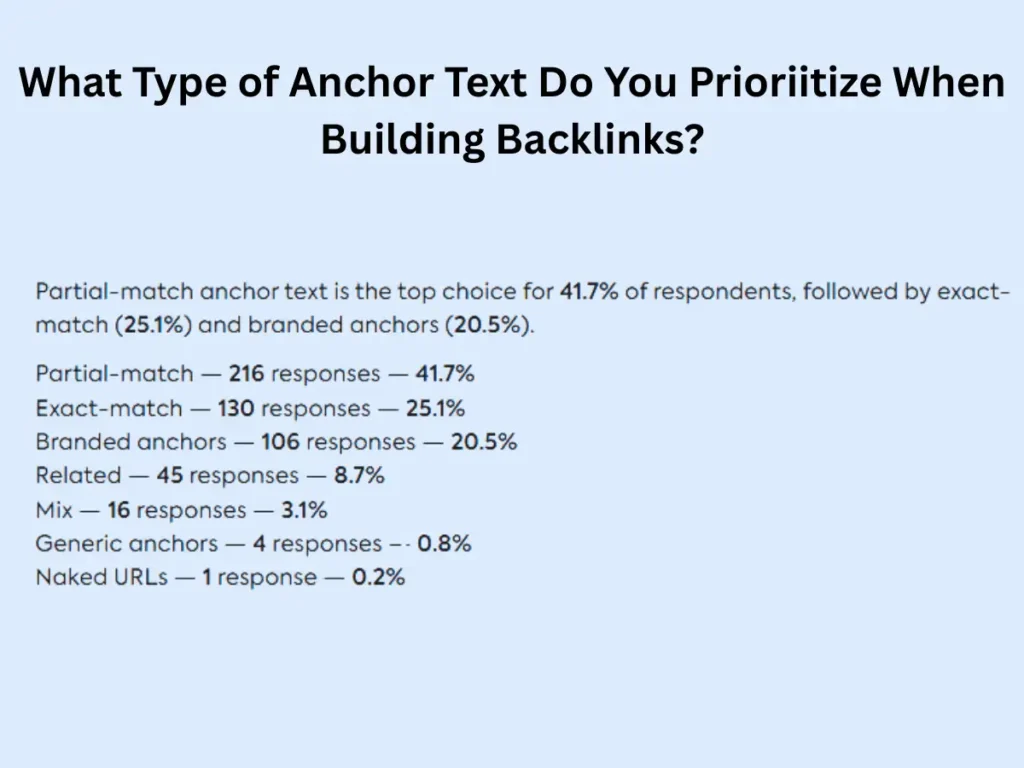
A detailed report must show a breakdown: Branded (your company name), Naked URLs (www.yoursite.com), and Target Keywords.
A natural 2026 profile usually consists of 50-60% branded anchors to keep the site safe from “Manual Action” penalties.
5. Link quality signals
Not all links are created equal.
You must define the “authority” metrics for every link secured.
This includes Domain Rating (DR) from Ahrefs or Domain Authority (DA) from Moz.
More importantly, show the Monthly Organic Traffic of the linking site.
A link from a DR 70 site that gets zero traffic is likely a “dead” site. A link from a site with real, active readers is the gold standard for SEO.
6. Toxic/Bad backlinks
Negative SEO is a real threat where competitors or spam bots link to your site from “adult” or “gambling” sites.
Including a section on toxic links proves you are acting as a digital bodyguard.
By identifying these “spammy” signals early, you can advise the client on whether to ignore them (as Google often does now) or use the Disavow tool if a manual threat is detected.
7. Link attributes
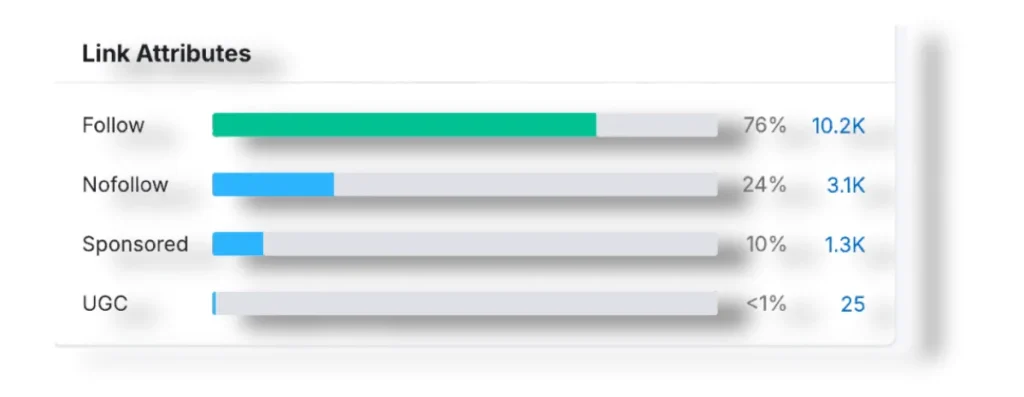
Every link comes with a “tag” like Dofollow, Nofollow, UGC, or Sponsored.
While Dofollow links pass the actual “SEO juice” that helps you rank, a profile with zero Nofollow links looks fake.
Your report should show a healthy mix. Interestingly, in 2026, search engines and AI models use Nofollow links as “hints” for brand authority, so they still hold significant value for your overall digital footprint.
8. Top pages by backlinks
Which specific pages on your site are “earning” the most links?
This data point helps you understand if your link-building strategy is too lopsided.
For example, if 90% of links go to the Homepage, your “Service” or “Product” pages might struggle to rank.
A good report highlights the “Link Equity” distribution, ensuring that your most profitable pages are getting the authority they need to move to Page 1.
9. Inbound vs. outbound link ratio
This metric looks at the quality of the sites that are linking to you.
If a website links out to 5,000 other sites (Outbound) but only has 50 sites linking to it (Inbound), it is likely a “Link Farm.”
We ensure that the sites we choose for our clients have a healthy ratio, meaning they are respected authorities that are selective about who they link to.
Outcomes Report
This is where the “magic” happens. This section connects the links to the client’s bottom line.
10. Target keyword and page rankings
This is the most direct proof of success. The report should show a table of your target keywords and their movement.
For instance, showing a keyword moving from Position #45 to Position #12 after a 3-month link-building campaign is a “win” that every client understands.
It provides visual evidence that the “authority” you are building is actually moving the needle in search results.
11. Organic traffic
Links are the fuel, and organic traffic is the vehicle. Using data from Google Analytics 4 (GA4) and other third party tools like Ahrefs, you should demonstrate a correlation between the links built and the increase in monthly visitors.
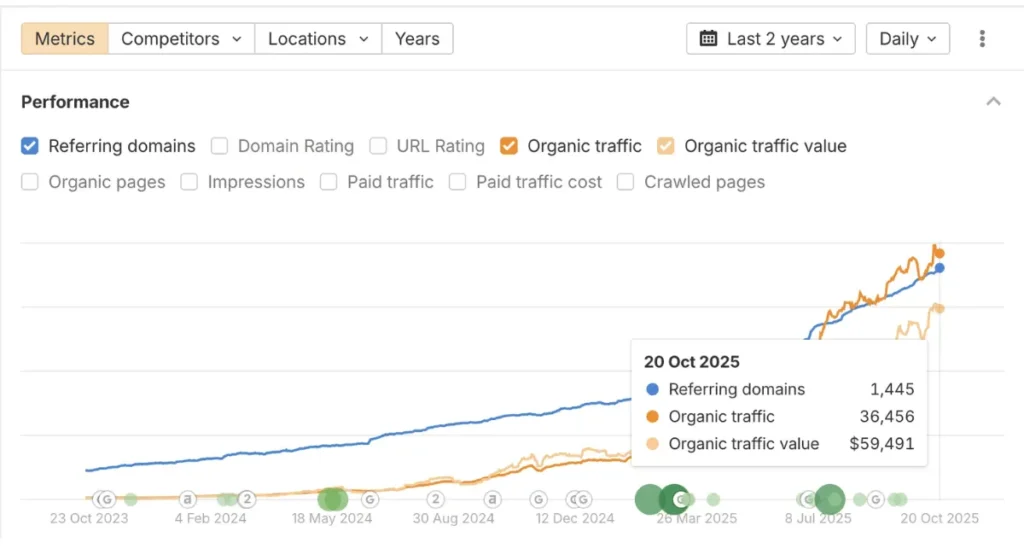
When a client sees that their “Organic Sessions” have increased by 25% since the campaign started, the cost of link building becomes an investment with a clear return.
12. Referral traffic from backlinks
A high-quality link on a relevant site does more than just help SEO; it brings actual customers.
If we place a guest post on a major industry blog, we track how many people clicked that link and landed on your site.
This “referral traffic” is often highly qualified and leads to higher conversion rates, proving that the link is placed in front of a real, engaged audience.
13. AI search visibility
New for 2026: With the rise of AI search engines like ChatGPT, Perplexity, and Google’s AI Overviews, traditional ranking isn’t enough.
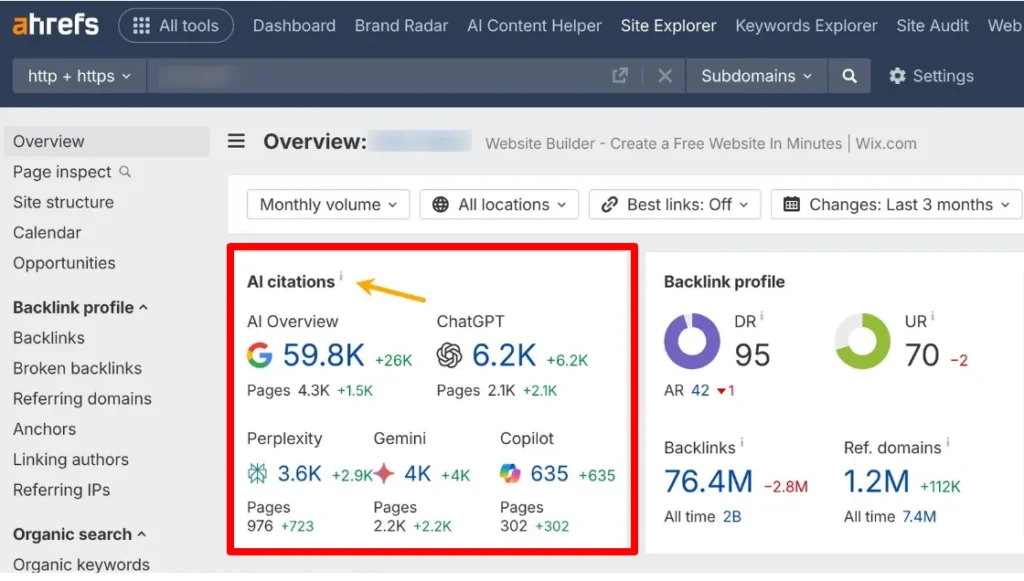
We now track whether your brand is being “cited” as a source by AI.
These AI models rely on high-authority backlinks to decide which companies to recommend. Showing a screenshot of an AI answer citing your website as an expert source is a huge “confidence win” for modern clients.
Operations and Finance Report
Transparency in how the budget is spent is what keeps clients renewing their contracts.
14. Link pricing and budget transparency
No one likes hidden costs. A professional report breaks down the budget clearly. Whether you charge per link or a flat retainer, show the value.
For example: “Budget: $5,000 | 10 Premium Links Secured | Avg. DR: 65.” Breaking down the costs for content creation, outreach, and placement fees builds a level of trust that “black-box” agencies can never match.
15. Pipeline and outreach performance
Link building is 90% perspiration and 10% publication.
Show the client the “hustle.” Mention how many sites were contacted (e.g., “Reached out to 150 editors”), the response rate, and the links currently in the “Pipeline” (negotiation phase).
This explains why some links take time and proves that your team is working hard behind the scenes to secure only the best placements.
Create Clear Link-Building Reports to Demonstrate ROI to Clients
In 2026, clients are more educated than ever. They don’t want fluff; they want facts. By using these 15 data points, you transform a simple spreadsheet into a powerful strategic document.
SEO Tip for 2026: Focus on “Topical Clusters” Don’t just build links to your homepage; build a web of links that support your most important content pillars. This creates a “Moat” around your rankings that competitors can’t easily cross.
At ethicalbacklinks.com, we prioritize the “Quality over Quantity” mantra. Whether it’s through editorial outreach or high-level digital PR, our reports ensure you see the value of every single backlink.
Ready to see what transparent, high-impact link building looks like? Let’s build your authority together.
Would you like me to create a sample table or a visual chart layout that you can include in this blog to make it look even more professional?